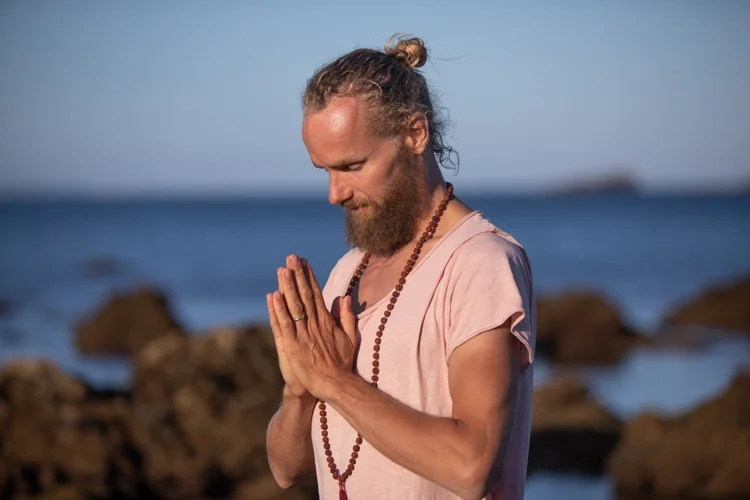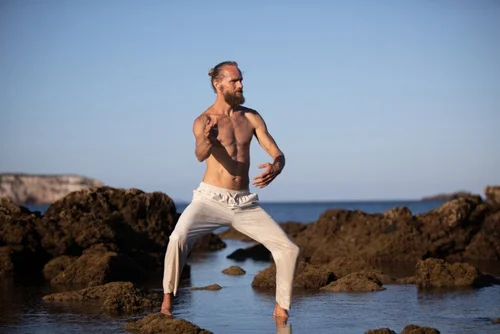
Your breath is the most powerful tool you have, and it is always with you. In this 71-minute conversation with breathwork teacher Mike Maher of Take a Deep Breath, we explore breathing techniques to awaken your potential.
To learn more about Mike Maher, visit his YouTube channel and Instagram.
The breath as a remote control
The breath is the one function of the body that runs automatically, and that you can also control. That makes it a remote control for your nervous system, your emotions and your mind. Change the way you breathe, and you change the way you feel.
Strong and calm techniques
In breathwork we work with two kinds of techniques, and you need both for balance:
- Strong (activating) techniques, like Kapalabhati or Bhastrika, energise the body and cleanse. They are about opening up, not about getting dizzy or high.
- Calm (balancing) techniques, like slow belly breathing, alternate nostril breathing and breath holds after a calm exhale, bring you into rest and deep focus.
Read more in breathwork for beginners: strong and calm techniques.
Awakening your potential
When the breath is free, the energy flows. Many people carry old tension and emotions in the body, and the breath helps to release them. What remains is more clarity, more energy and more connection with who you really are. That is where your potential lives.
A note on safety: always breathe gently and never push your limits. If you have heart problems, epilepsy, high blood pressure or are pregnant, ask your doctor before doing strong breathing techniques. Read why you can faint during breathwork.
Questions people often ask
What is the most powerful breathing technique?
There is no single best technique. The most powerful one is the one that fits what you need right now: an activating technique when you feel tired, a calming one when you feel stressed. A good practice combines both.
Is breathwork safe?
For most people, yes, when you practise gently and follow good guidance. Strong techniques are not suitable for everyone, for example with heart problems, epilepsy or during pregnancy. Learn more in the benefits of breathwork: the science and techniques.
How do I become a breathwork coach?
A good training teaches you the techniques, the science behind them, safety and how to guide groups. Read how to become a pranayama or breathwork instructor in 5 steps.
Want to teach breathwork?
If these techniques inspire you and you would like to share them with others, the breathwork coach and pranayama teacher training teaches you to guide sessions safely and with confidence. To begin for yourself, learn pranayama online with Breath is Life. More talks are on the podcast page.
May we all be blessed with peace, love and wisdom.
Michaël