Knowing breathing techniques is one thing. Guiding another person through them, safely and with confidence, is another. After more than 15 years of teaching, these are the seven principles I share with every new teacher. If you want to teach breathwork, they will help you create sessions that are safe, clear and genuinely transformative.
1. Teach from your own practice
For me, the most important preparation for teaching breathwork is your own daily practice. When you have felt the effects of a technique in your own body, you can explain it honestly, anticipate what your students will experience and stay calm when something unexpected comes up.
Before you teach a technique, I recommend practising it regularly for at least several weeks. Notice how it affects your energy, your emotions and your mind at different times of day.
2. Put safety first
Breathwork is powerful, and stronger techniques are not suitable for everyone. Always ask new students about their health before a session. Be especially careful with, and in many cases avoid strong or retention-based techniques for, people who:
- are pregnant;
- have epilepsy or a history of seizures;
- have heart conditions, high blood pressure or a history of stroke;
- have a serious mental health condition, or are in acute emotional crisis;
- have recently had surgery, or have glaucoma or a detached retina.
Never let students practise intense breathing in or near water, while driving, or standing where they could fall. When in doubt, choose a gentler technique and advise students to check with their doctor. A good breathwork teacher always has a calm, simple option ready.
3. Create a safe space
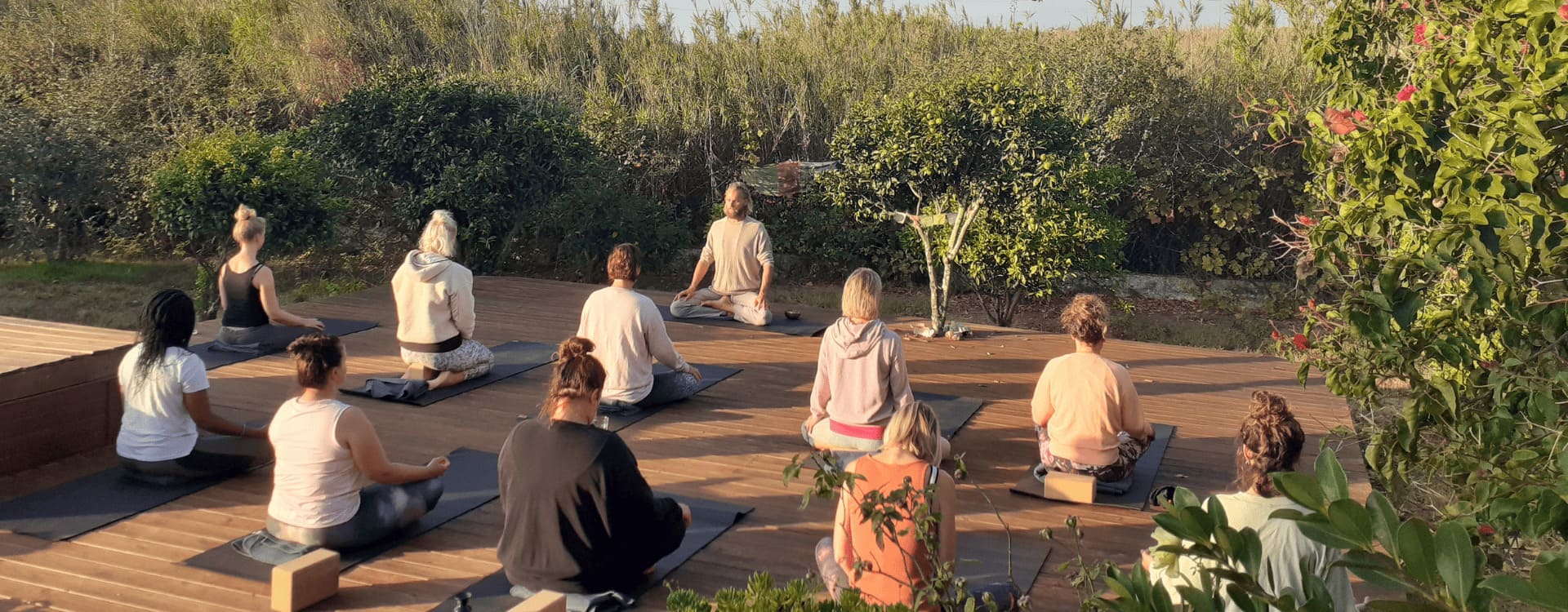
People open up during breathwork. Emotions, memories and physical sensations can surface. Your job is to create an environment where that feels safe: a quiet room or a calm online setting, clear agreements about what will happen, and permission for students to stop or slow down at any time.
Holding space means staying present and grounded yourself, without trying to fix or analyse what someone experiences.
4. Structure every session
A clear structure helps students relax into the practice. This is the simple structure I use for most of my sessions:
- Arrival: a few minutes to settle, check in and observe the natural breath.
- Preparation: gentle movement or simple breathing to warm up the body and the diaphragm.
- Main practice: the core technique or sequence, building up gradually.
- Integration: rest, silence or meditation to let the effects settle.
- Closing: a short sharing or reflection and a smooth return to daily life.
Always leave enough time for integration. It is often where the deepest effects are felt.
5. Give clear, simple instructions
When people are breathing deeply, they cannot process long explanations. Explain the technique briefly before you start, demonstrate it, then guide with short, calm cues: “In through the nose… long exhale through the mouth…”.
Your voice is your main teaching tool. Speak slowly, leave silence, and match your tone to the practice: steady and rhythmic for active techniques, soft and spacious for calming ones.
6. Balance strong and calm techniques
Energising techniques like Kapalabhati or conscious connected breathing can release tension and lift energy. Calming techniques such as alternate nostril breathing, Bhramari or a long, slow exhale bring the nervous system back to balance.
A good session balances both. My rule: follow strong practices with calm ones, and end every session in a relaxed, grounded state.
7. Keep learning and get proper training
Every group teaches you something new. After all these years, mine still teach me. Ask for feedback, reflect on your sessions and keep deepening your own practice. A structured breathwork or pranayama teacher training gives you a solid base: a wide range of techniques, the science behind them, safety guidelines, session templates and supervised teaching practice.
Learn to teach breathwork with me
In my Breathwork & Pranayama Instructor Course, I teach you exactly these skills: 20 breathwork and pranayama techniques, advanced pranayama, session design, and practice teaching in a safe space with other students. The training is fully online, includes 5 live sessions with me and ends with the LIFE AWARENESS™ certification and 50 Yoga Alliance CEUs.
New to pranayama? Start with my A basic Introduction to Pranayama and its Techniques.