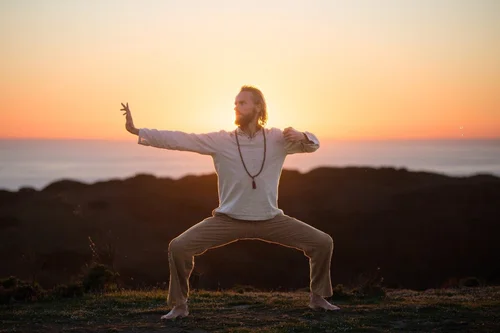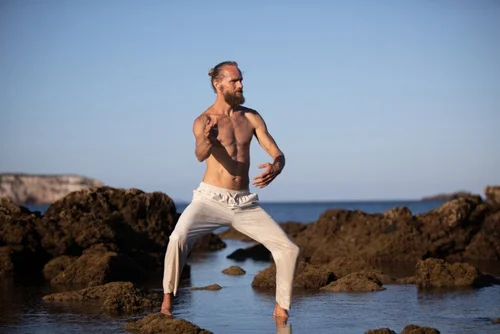
At 18 I had a serious car accident. My right arm was paralysed and my spine and hip were broken, and the doctors were not sure I would fully recover. In this podcast with Aditya Jaykumar (AJ) of My Seven Chakras, I share how QiGong, yoga, pranayama and kindness helped me heal.
To learn more about AJ, visit My Seven Chakras (mysevenchakras.com).
QiGong: gentle movement for healing
QiGong combines slow, flowing movement with calm breathing and focused attention. Because it is so gentle, you can practise it even when the body is weak or in pain. It helps the energy, blood and breath to flow, and it gives the body a chance to do what it does naturally: heal. Read more in what is QiGong and how to start.
Pranayama: the breath that calms the system
Pain and stress go hand in hand. When we hurt, we tense up and breathe shallowly, which often makes the pain feel worse. Slow, deep pranayama tells the nervous system it is safe. The muscles soften and there is more space to feel and to heal.
Kindness towards yourself
Healing is not a fight against your body. It is caring for it. Be patient and kind with yourself, and never push your limits. Kindness opens the heart, and an open heart is a wonderful place to heal from.
A gentle practice for when the body hurts
- Lie or sit comfortably, supported if needed.
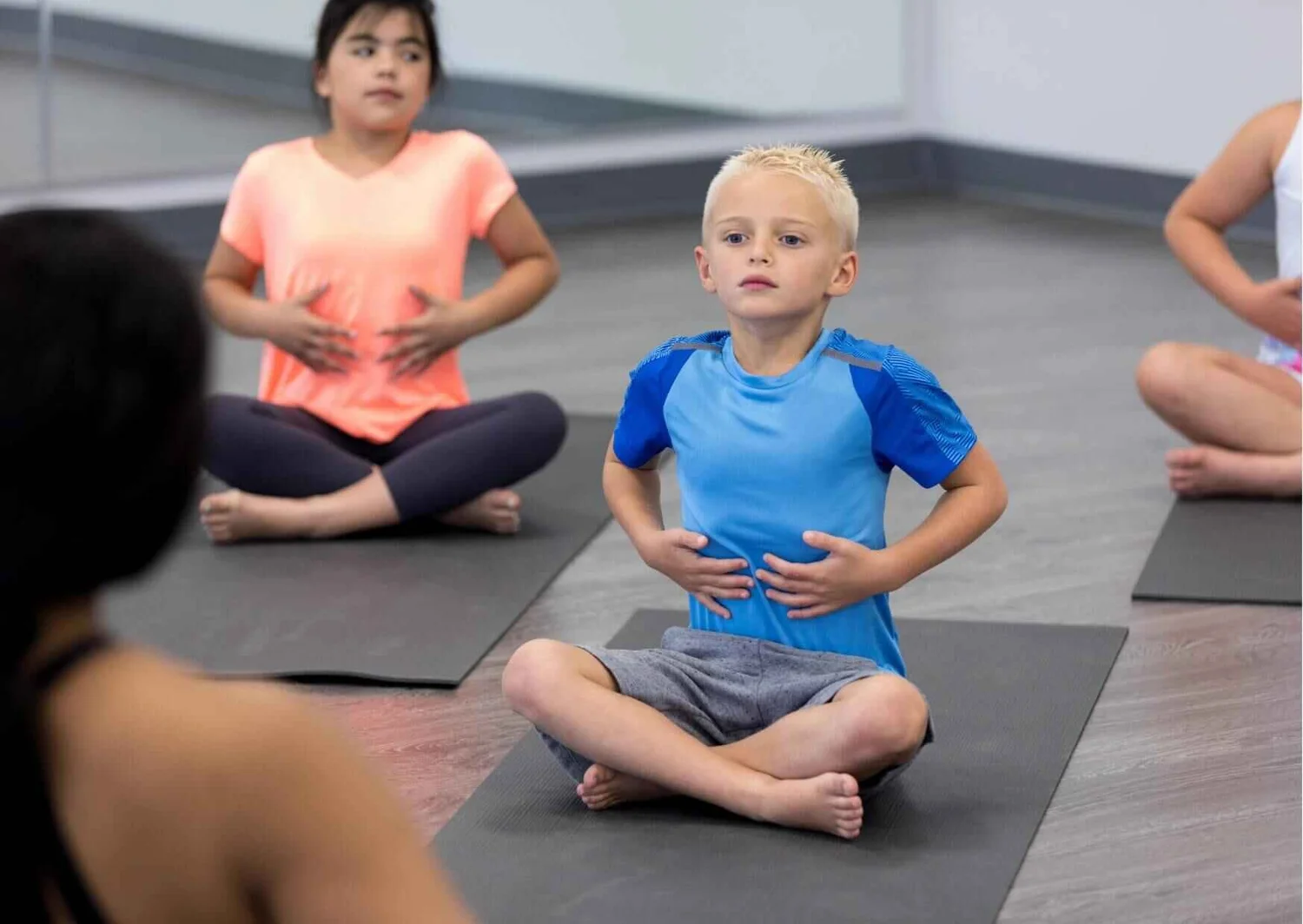
- Breathe slowly into the belly. With every exhale, imagine the breath flowing to the place that hurts.
- Silently say: “I am here for you.” Feel kindness towards that part of your body.
- Continue for five minutes.
These practices support healing, but they never replace medical care. Always follow the advice of your doctor or therapist.
I share the full story in my healing journey with breathwork, QiGong and meditation.
Questions people often ask
Can QiGong help with chronic pain?
Many people with long-lasting pain find gentle QiGong helpful, because it moves the body softly, calms the nervous system and brings attention back to the body in a kind way. It is a support, not a replacement for medical treatment, so talk to your doctor or therapist about your situation.
Which pranayama is good when I am in pain?
Gentle, slow techniques are best: belly breathing with a long exhale, or alternate nostril breathing. Avoid strong or fast techniques and breath holds when you are in pain or recovering.
I can’t stand for long. Can I still do QiGong?
Yes. Many QiGong movements can be done sitting on a chair. Move within what feels comfortable, and let the breath and attention do much of the work.
Continue your practice
Learn the movements I practised myself in the complete online QiGong course, and the breathing techniques in Breath is Life, the online pranayama course. More talks are on the podcast page.
May we all be blessed with peace, love and wisdom.
Michaël