If you search for a way to share breathing practices with others, you quickly run into two names: breathwork teacher training and pranayama teacher training. Are they the same thing? Which one do you need? And can you learn to teach them online?
I get this question a lot from my students. In this guide I explain the difference in plain language, so you can choose the path that fits the teacher you want to become.
What is pranayama?
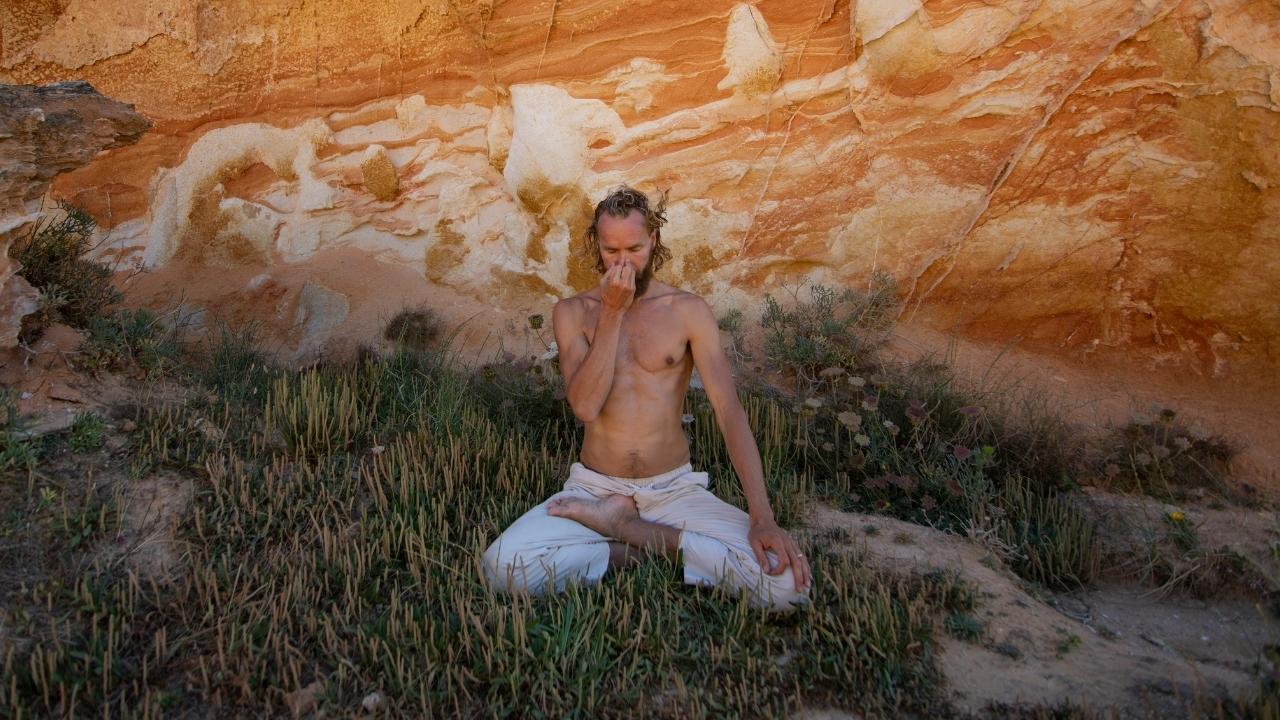
Pranayama comes from the yoga tradition. The word combines prana (life force) and ayama (extension or control). It is a set of precise breathing techniques, such as alternate nostril breathing (Nadi Shodhana), Ujjayi, Kapalabhati and Bhramari, that have been practised and refined over thousands of years.
In classical yoga, pranayama is one of the eight limbs. It sits between the physical postures and meditation: a bridge from the body to the mind. A traditional pranayama practice is usually calm, structured and precise, with attention to rhythm, retention and the subtle effects of each technique.
What is breathwork?
Breathwork is a broader, more modern umbrella term. It covers every conscious way of working with the breath: pranayama, but also contemporary methods such as coherent breathing, box breathing, conscious connected breathing and techniques used by athletes, therapists and coaches.
Breathwork sessions can be gentle and calming, or strong and activating. They are often used for stress relief, emotional release, focus and energy, and they are taught in yoga studios, therapy rooms, companies and online.
The key differences at a glance
- Roots: pranayama is rooted in yoga philosophy; breathwork draws on yoga as well as modern science and therapy.
- Style: pranayama is usually subtle and precise; breathwork ranges from subtle to very dynamic.
- Setting: pranayama is often taught within a yoga class; breathwork is taught on its own, one-to-one or in groups.
- Language: pranayama uses traditional Sanskrit names and concepts; breathwork often uses everyday and scientific language.
In practice, the two overlap a lot. Many of the most effective breathwork techniques are pranayama techniques, simply explained in a modern way. In my own practice and teaching, I have always combined them.
Breathwork teacher training vs pranayama teacher training
A pranayama teacher training typically focuses on the classical techniques, their correct execution, their effects on body and mind, and their place in yoga philosophy. It is a natural next step for yoga teachers who want to bring more depth to their classes.
A breathwork teacher training usually goes wider. Next to the techniques themselves, it teaches you how to design complete sessions, how to guide groups and individuals, how to hold space for emotions that come up, and how to work safely with different people and situations.
In my experience, the strongest trainings combine both: the depth and precision of pranayama with the practical teaching skills of modern breathwork.
Which one is right for you?
Ask yourself who you want to teach and in what setting:
- You are a yoga teacher and want to add breathing practices to your classes: a pranayama-focused training gives you depth and authenticity.
- You are a coach, therapist or trainer and want to use the breath with clients: a breathwork training gives you flexible tools and session design skills.
- You want to guide your own breathwork sessions, workshops or retreats: look for a training that covers both, plus the practical side of teaching.
- You mainly want to deepen your own practice: either path works, as long as it includes plenty of personal practice.
What a good training should include
Whichever name it carries, I believe a good breathwork or pranayama teacher training should give you:
- A wide range of techniques, both calming and energising, and when to use each one.
- A clear understanding of the science: what the breath does to the nervous system, heart rate and mind.
- Safety knowledge, including contraindications and how to adapt practices for different people.
- Practical teaching skills: structuring a session, giving clear instructions, and holding space.
- Real practice teaching, with feedback, before you work with your own clients.
- A recognised certification, and ideally continuing education credits such as Yoga Alliance CEUs.
- Above all, a strong personal practice. You can only truly share what you have experienced yourself.
Can you learn to teach breathwork and pranayama online?
Yes. Online training has become a natural way to learn breathwork, because the practice itself needs no equipment and works perfectly over video. A good online training combines recorded lessons you can repeat as often as you like with live sessions where you practise together, ask questions and get feedback from your teacher.
How I teach it at Yogalap
In my Breathwork & Pranayama Instructor Course I bring both worlds together. You learn 20 breathwork and pranayama techniques in the self-paced “Breath is Life” module, then join a 4-week live cohort with me to learn advanced pranayama and how to teach with confidence. You finish with the LIFE AWARENESS™ Breathwork Instructor certification and 50 Yoga Alliance CEUs, fully online.
Want to know more about the path itself? Read my post How to Become a Pranayama Breathwork Instructor in 5 Steps.